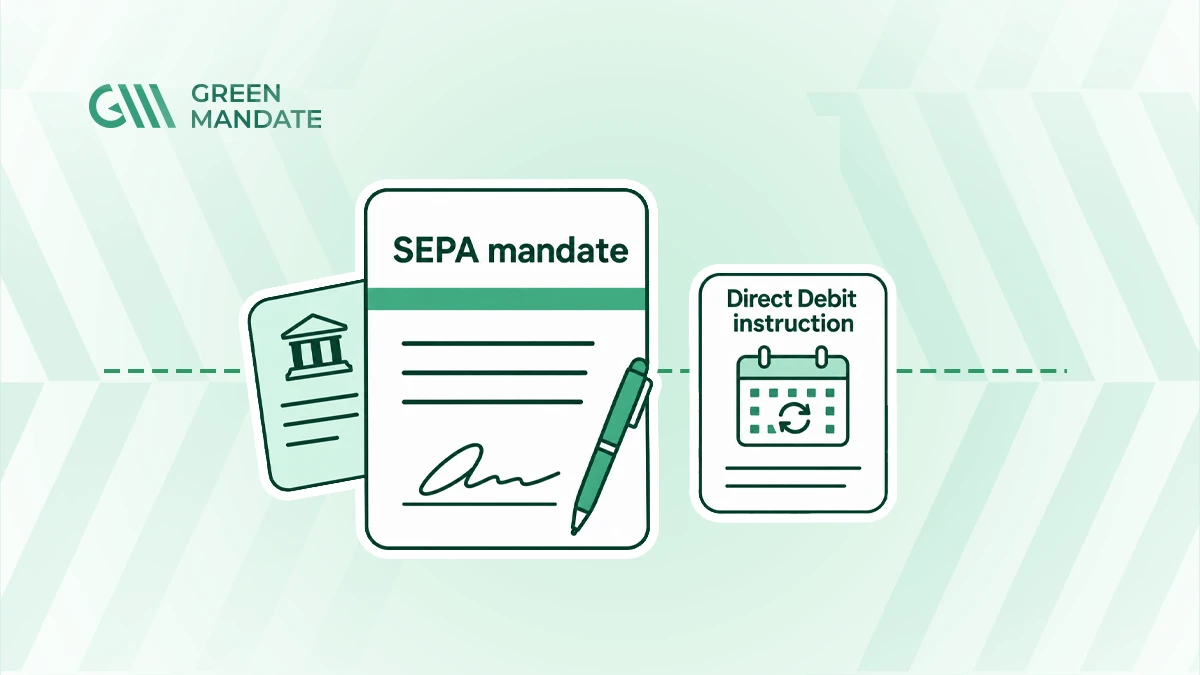
What is SEPA mandate authorization for? A SEPA Direct Debit mandate records the debtor’s authorization for a creditor to collect euro payments and for the debtor’s payment service provider to debit the account under the applicable scheme. The mandate is the authorization record. The collection instruction that requests the money is a later payment message.
The invoice itself can be fine and still go unpaid. Finance may open the failed debit and find an incomplete B2B confirmation, or discover that an account change never made it into the payment file. The fix is in the mandate data, not the invoice.
Key Takeaways
Before a debit is sent, the record should show what the debtor authorized and every change made since signing. The scheme and current mandate data then determine what goes into the collection.
- A SEPA mandate authorizes future Direct Debit collections; it is not the payment instruction or settlement itself.
- Core serves consumers and businesses. B2B adds debtor-PSP confirmation and has a different authorized-payment refund position.
- BIC and debtor-address requirements are conditional, so a universal field checklist creates incorrect mandate data.
- Digital mandate management improves record retrieval and status handling. Scheme duties and payment-law rights remain in place. Bank decisions remain separate.
What Is a SEPA Mandate?
The mandate stays on file as authorization for the agreed collections. A customer billed €2,000 each month does not sign again for every invoice; the creditor submits a separate Direct Debit instruction for each amount due. Finance retains the signed authorization in case a collection is challenged.
The March debit bounces. The account was short, but finance still has the signed mandate on file. Months later, the customer says they never approved the debit. Finance checks the signature and terms on that mandate.
SEPA Mandate Authorization Evidence
A paper mandate carries the debtor’s signature. An electronic route produces a digital record of the method used to authorize the mandate. In either case, the creditor needs a record that can be reproduced later together with any amendment or cancellation history.
How Does a SEPA Mandate Move From Authorization to Collection?
What is SEPA Direct Debit? It is the payment method used to collect euro funds under a signed mandate. The creditor chooses Core or B2B, obtains the debtor’s authorization, and retains that record before sending a separate collection instruction.
Once payment is due, the creditor submits the collection through its payment service provider. Mandate information travels with that payment instruction through the payment chain. Under B2B, the debtor’s payment service provider has mandate-confirmation and collection-check duties. Under Core, there is no equivalent universal preregistration step.
From the Signed Mandate to the Payment File
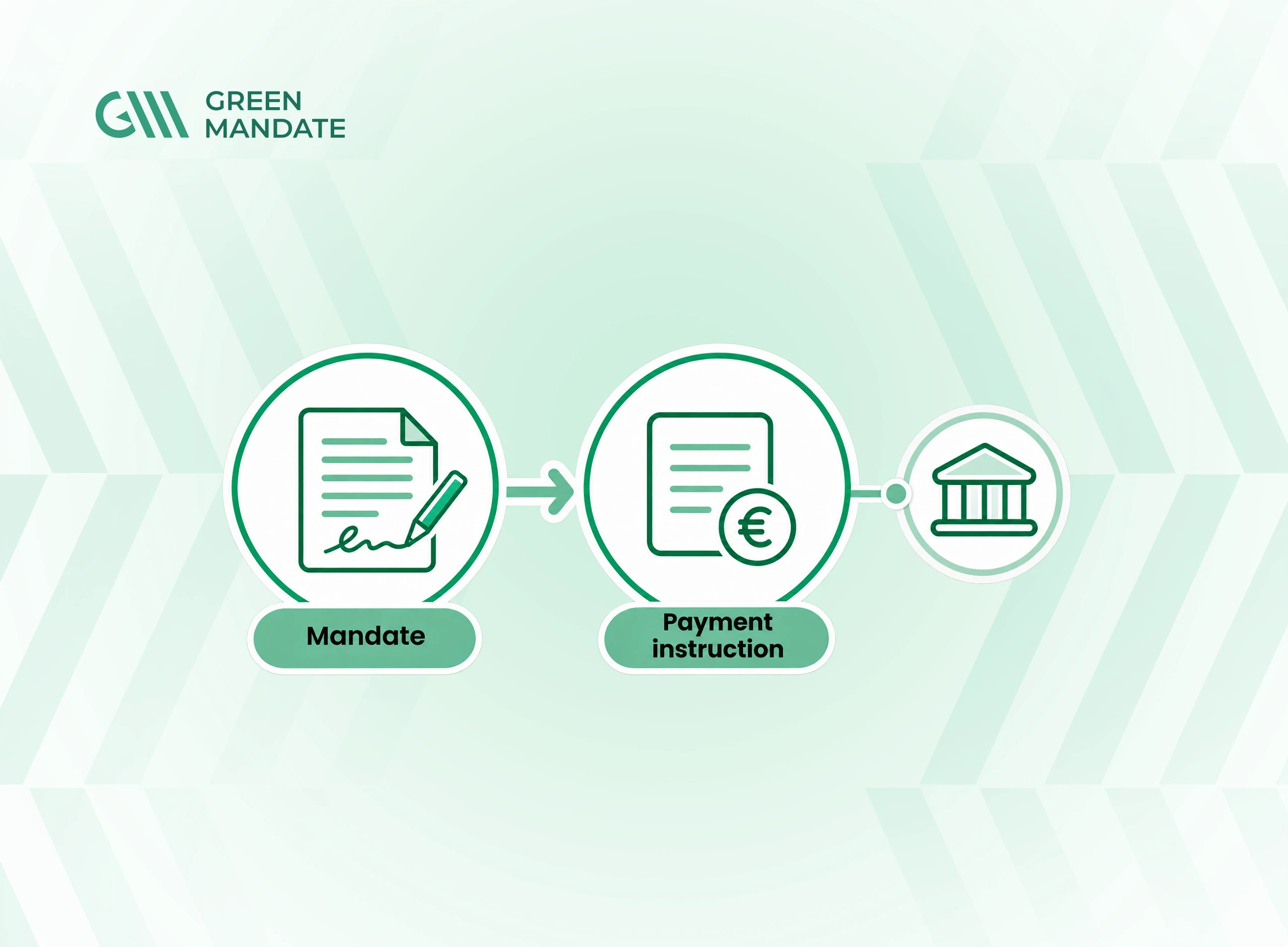
Once the debtor has signed, the mandate stays with the creditor until a payment is due. Billing provides the amount and due date for that payment. The creditor’s payment service provider then receives the Direct Debit instruction. Settlement happens in the payment infrastructure, not in the mandate system.
What Information Must a SEPA Mandate Contain?
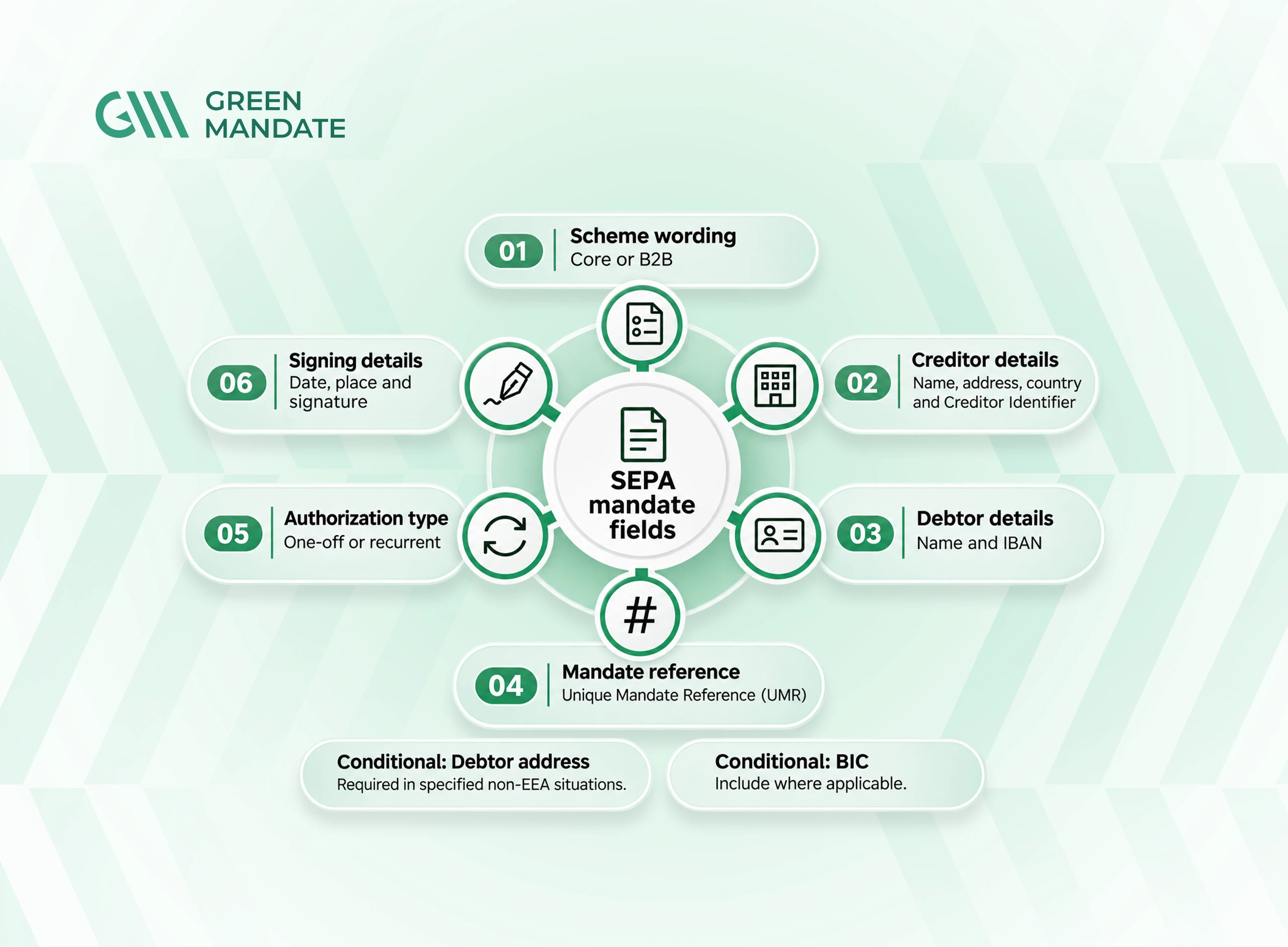
A SEPA mandate form uses the wording and data required by the selected scheme. Core and B2B use different mandate wording. Some data fields apply only under defined conditions.
| Information | Purpose | Scope |
|---|---|---|
| Creditor name, address, country, and SEPA Creditor Identifier | Identifies the collecting party | Creditor Identifier issuance follows country-specific arrangements |
| Debtor name and IBAN | Identifies the debtor and account | Account or identity verification is a separate control |
| Unique Mandate Reference | Identifies the mandate together with the Creditor Identifier | If it is unavailable at signing, it is communicated before the first collection is initiated |
| Core or B2B scheme wording | Records the scheme terms accepted by the debtor | The wording has to match the selected scheme |
| One-off or recurrent authorization | Records the collection pattern | This choice is separate from Core versus B2B |
| Signing date, place, and signature data | Records the act of authorization | Paper and valid electronic methods are permitted |
A debtor address becomes mandatory only in specified non-EEA SEPA situations. A debtor-supplied BIC is conditional and does not belong on every mandate. Treating either field as universally mandatory introduces avoidable errors in data collection.
Optional business references may be added, but they do not replace scheme data. The sepa creditor identifier identifies the collecting party; the Unique Mandate Reference identifies the particular authorization.
How Do SEPA Core and SEPA B2B Mandates Differ?
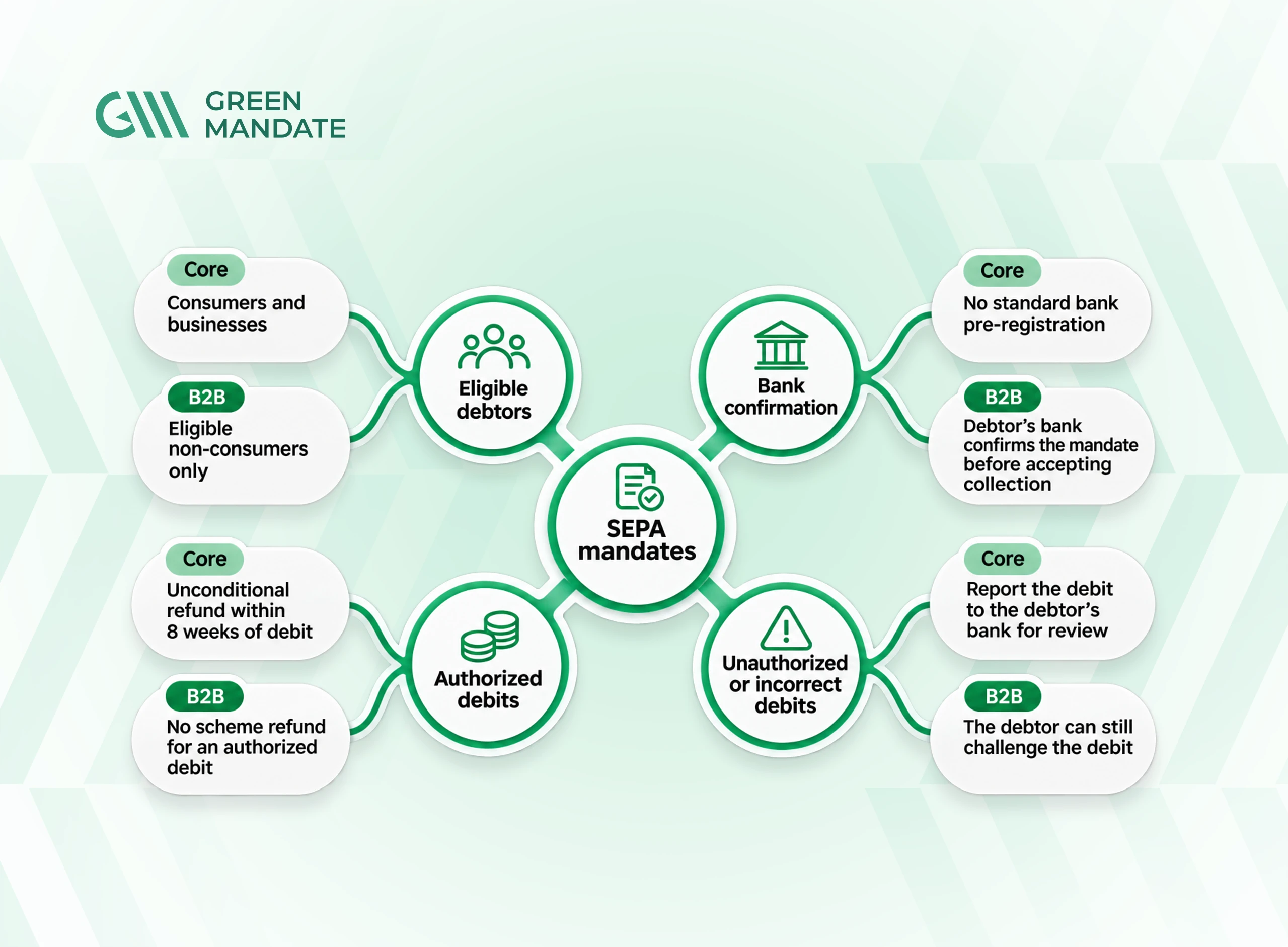
The EPC’s Core and B2B scheme guidance describes the two routes. Core is available to consumers and business debtors. B2B is limited to eligible non-consumer debtors and requires separate debtor-PSP confirmation before collections are accepted.
| Operational point | Kern | B2B |
|---|---|---|
| Eligible debtor | Consumers and businesses | Eligible non-consumers |
| Debtor-PSP mandate confirmation | No universal B2B-style preregistration requirement | Required before collection acceptance under the scheme |
| Authorized-payment refund position | Unconditional eight-week refund right | No equivalent scheme refund right for an authorized transaction |
| Unauthorized or erroneous payment | Separate legal/remedy category | Separate legal/remedy category |
What is SEPA mandate confirmation in B2B? The debtor must be eligible for B2B, and the debtor’s payment service provider must separately confirm the mandate before a collection can be accepted. Core has no equivalent confirmation step. An electronically signed sepa core direct debit mandate still follows Core rules; the signing method does not change the scheme’s refund rights.
What Changes Between Paper and Electronic SEPA Mandates?
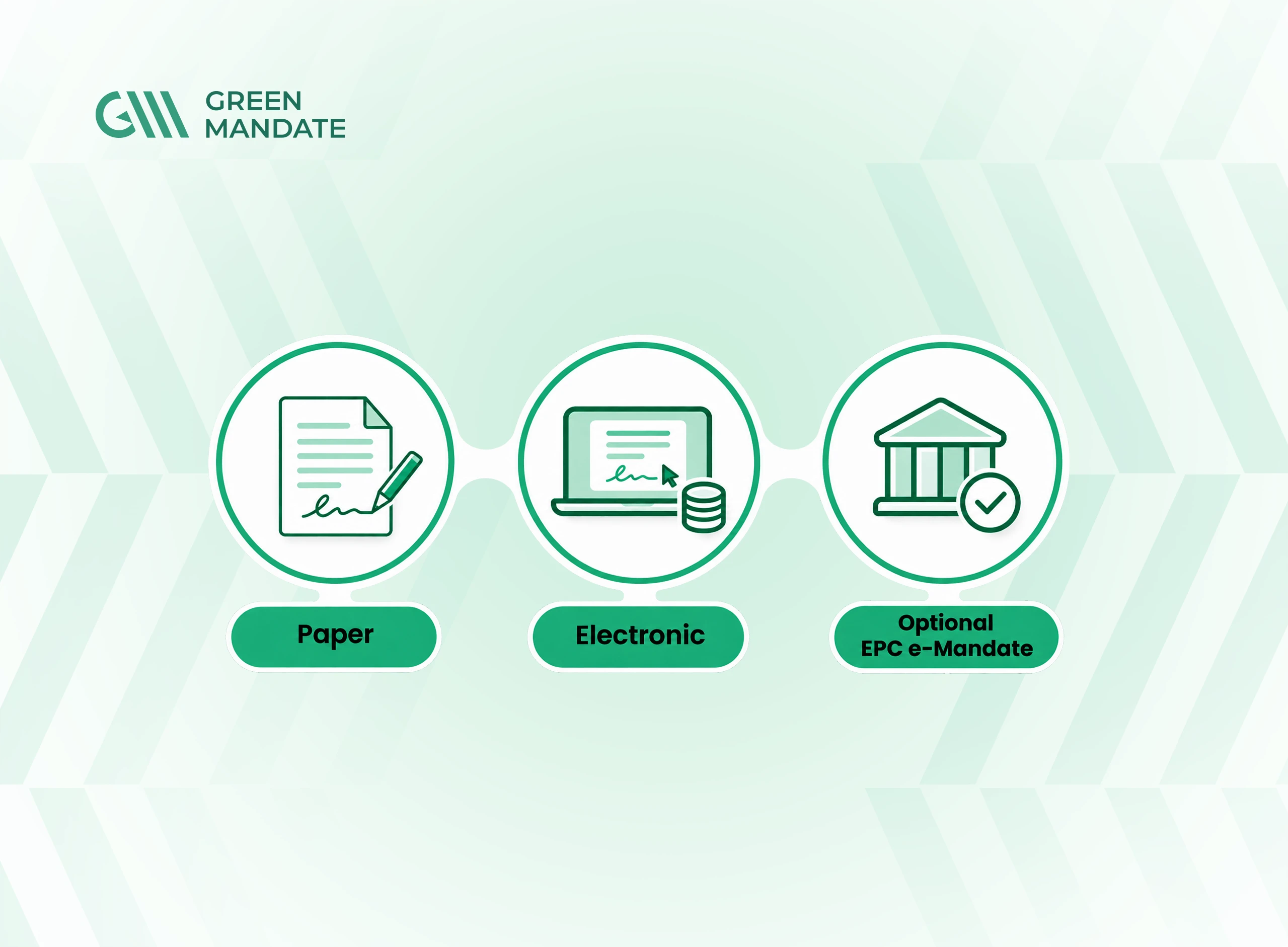
Paper and electronic mandates serve the same authorization purpose. An e-mandate captures the debtor’s authorization electronically and retains the signing evidence digitally. The rules for subsequent Direct Debit collections do not change because the customer signed online.
With paper, the signed form is the original authorization evidence. With an electronic route, the creditor must be able to retrieve the method and record of signing, including what the debtor agreed to.
EPC e-Mandate Service
The term e-Mandate also has a narrower EPC meaning. The EPC uses it for an optional service in which payment service providers validate the mandate through a specific message flow. An online mandate does not become part of that EPC service merely because the debtor signed electronically. Scanning a paper mandate changes the storage format, not the original authorization method.
Is a SEPA Mandate Legally Binding?
A valid mandate is created on paper or through an electronic signing method that is legally valid for the relevant setup. The scheme does not impose one universal electronic-signature level across every mandate route.
Under eIDAS, an electronic signature cannot be denied legal effect or admissibility as evidence solely because it is electronic or because it is not qualified. A qualified electronic signature has the legal effect of a handwritten signature. Those rules are not interchangeable.
An advanced electronic signature is one possible signing method for an electronic SEPA mandate. SEPA does not make AES mandatory for every electronic mandate. QES has a separate legal effect under eIDAS, so the retained evidence identifies the method actually used.
How Do SEPA Mandate Validity, Amendments, Cancellation, and Retention Work?
A mandate may still be on file after it has become unusable. Before another debit goes out, finance needs the last collection date, the current account details, and any amendment or cancellation.
Validity Is Measured From Collection Activity, Not the Signature Date
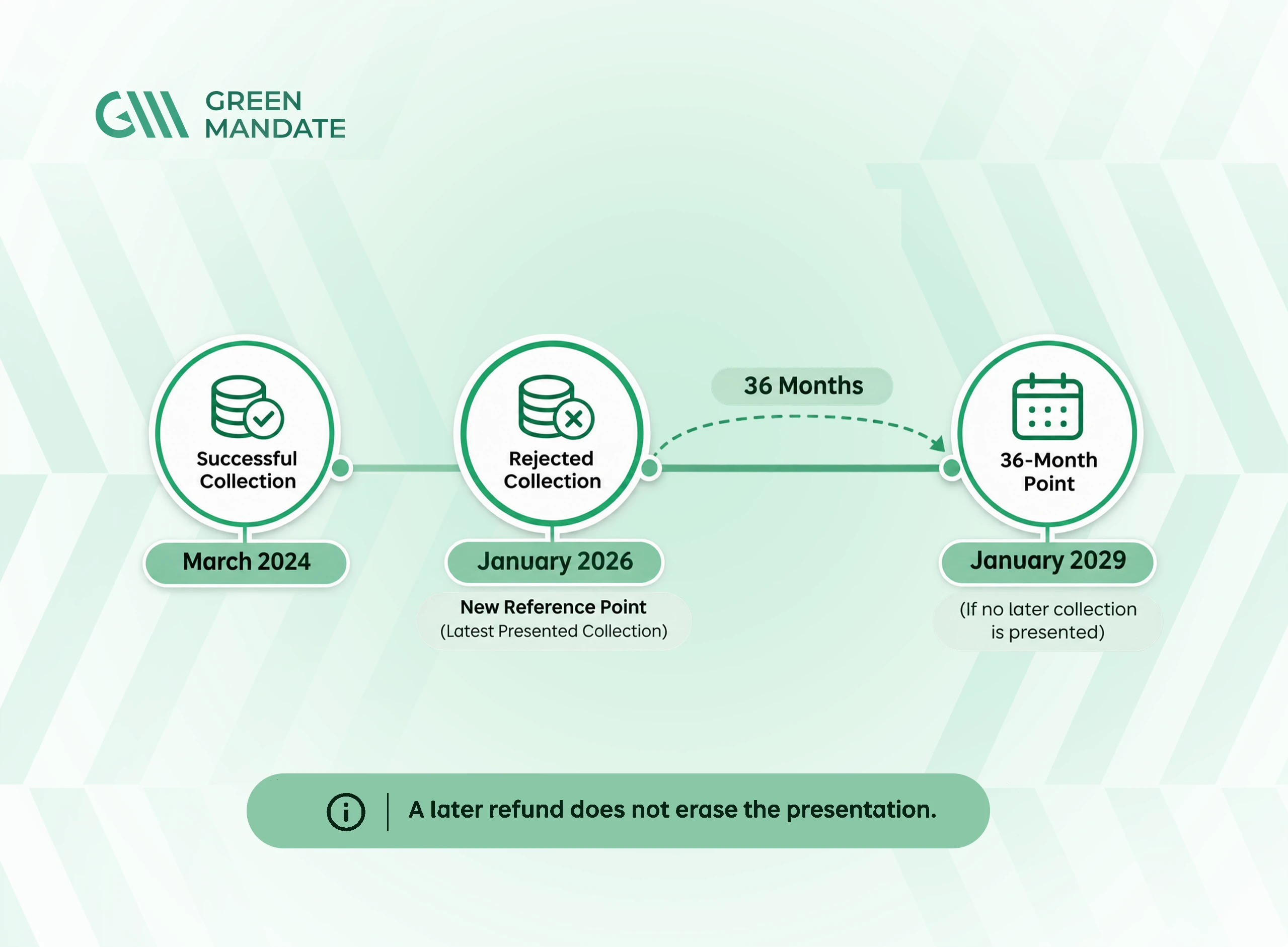
What is SEPA mandate validity measured from? A mandate signed in 2024 and used again in 2026 is not measured from its 2024 signature date. For a mandate already used for collection, the 36-month inactivity clock starts from the most recently presented collection.
A Rejected Debit Can Become the New Reference Date
A creditor’s last successful debit might be March 2024, but a rejected debit presented in January 2026 changes the inactivity date. The 36 months run from the January presentation because the collection was presented even though it was rejected. A later refund does not erase that presentation. Both Core and B2B measure inactivity from the last presented collection.
The Customer Has Changed Bank Accounts
The customer gives you a new IBAN, but the payment file still contains the old one. That is the problem to fix. Put the new account on the mandate and keep the old account in the history. Record any UMR or Creditor Identifier change there as well.
A creditor name change is not just another field update. Before carrying the mandate forward, check that the governing law permits it.
Canceling the Mandate
The cancellation arrives after this month’s debit has already been sent. Finance stops future collections under the mandate. The debit already in flight is dealt with under the payment rules and contract for that transaction.
Evidence Needed After Cancellation
A debtor challenges a collection six months after canceling the mandate. The creditor then looks back to the signed mandate and the record of later changes. No single 14-month retention period applies to every business. The scheme rules set part of the retention requirement. Governing law and the creditor’s agreement with its payment service provider determine any applicable additional period.
What Pre-notification and Sequence Rules Apply to Creditors?
Before collection, the creditor normally tells the debtor the amount and due date. The scheme default is 14 calendar days. The creditor and debtor may agree on another notice period. An invoice or payment schedule serves as a pre-notification when it includes the required payment information.
Collection sequence codes describe the payment instruction, not the signature or authorization method.
- OOFF: One-off collection.
- RCUR: Recurrent collection, including the first recurrent debit.
- FRST: Available for a first recurrent collection, but optional since 2016.
- FNAL: Final recurrent collection.
B2B bank confirmation remains a separate requirement. The confirmation channel depends on the debtor’s payment service provider and the route supported for that mandate.
How Is a SEPA Mandate Created in Practice?
Before the first collection, the creditor prepares the correct scheme wording and account details, then obtains the debtor’s signature. Under B2B, the debtor’s payment service provider separately confirms the mandate information before accepting collections. Track the bank’s confirmation or registration status alongside the signed authorization, and reconcile any later changes across both records.
- Select the scheme. Confirm that the debtor and planned collection fit Core or B2B.
- Prepare the mandate terms. Start with the wording for Core or B2B. Add the creditor name and Creditor Identifier, then the debtor name and IBAN. Record the collection pattern and signing data. Add the UMR if it has already been assigned.
- Get the debtor’s signature. Use paper or the electronic signing method supported for the route and legal context.
- Store what was signed. Keep the signed mandate, along with any subsequent amendment or cancellation records, so the authorization remains available if questioned.
- Complete B2B confirmation where applicable. The debtor’s payment service provider confirms the mandate information before accepting B2B collections.
- Communicate a later-assigned UMR. If the UMR was not available at signing, communicate it before initiating the first collection.
- Send pre-notification and submit the collection. Give the debtor the amount and due date within the agreed notice period, then send the Direct Debit instruction through the creditor’s payment service provider.
- Maintain the lifecycle record. Track amendments, cancellations, inactivity, and status so a later collection does not rely on stale or canceled authorization.
Before the first debit and after every amendment, the collection data should point back to the current mandate record. A stale UMR or account detail may not be caught until the instruction reaches a bank or payment provider. The same problem arises when an amendment never makes it into the collection file.
Which Mandate Errors Create Collection and Dispute Risk?
MD01 and MD02 are the clearest signs that a mandate problem has reached payment processing. MD01 covers a missing or invalid mandate, including incomplete B2B confirmation. MD02 points to inconsistent mandate information, such as an amendment that was not carried through correctly.
Common problems include:
- B2B confirmation is missing. An MD01 failure can send finance back to the mandate before another collection attempt.
- The payment file still has an old IBAN. The customer may already have supplied the replacement account, but the debit goes out with the previous one.
- The wrong scheme wording was used. Core and B2B mandates are not interchangeable.
- An old checklist still requires FRST or a BIC in every case. FRST has been optional since 2016, and BIC is conditional rather than universally required.
- The signer was identified, but their authority was never established. Identity and corporate signing authority are separate questions.
A rejection or return code describes what happened to the payment. It does not, by itself, establish fraud.

What Business Benefits Come From Digital Mandate Management?
Digital capture removes printing and postal handling from the authorization process. Electronic records also make a signed mandate easier to retrieve for a challenge or bank request.
When a Rejected Collection Has to Be Investigated
After a rejected collection, finance first opens the signed mandate and the latest change made to it. The status recorded at submission helps show where the failure occurred.
During that investigation, the signed mandate and the latest change were available without having to search through paper files or disconnected records. If the mandate system is connected to the billing or payment system, the status change is passed back to the system that started the collection.
A customer who disputes a debit has the same scheme refund rights regardless of how the mandate was stored. The payment provider handles the payment itself. Digital mandate management makes it easier for finance to retrieve the signed mandate and the latest amendment during that review.
Conclusion: How Can Finance Avoid Collecting Against an Outdated Mandate?
An outdated IBAN in the payment file can cause an otherwise correct invoice to remain unpaid on its due date. Account changes are only one example; any later mandate amendment must be reflected in the file that is actually submitted. If it does not, finance may discover the mismatch only after the payment provider rejects the debit.
Before finance sends a debit, Green Mandate displays the signed Core or B2B SEPA mandate, along with any subsequent changes. Connected systems receive mandate status updates from the same workflow. On supported B2B routes, Green Mandate sends registration information to the debtor’s payment service provider, which makes the approval or refusal decision. After a rejection, finance returns to the same signed record and change history.
Signing for a business depends on legal authority, not just identity. Under B2B, bank confirmation is a separate check, and the mandate’s status still matters after a rejected collection.
What Do Business Teams Ask About SEPA Mandates?
If the finance manager is authorized to bind the company, then yes. The B2B rulebook allows the account holder or an authorized representative to sign. An identity check confirms the person's identity. Authority to sign for the company comes from its signing rules and the law governing representation.
No separate EPC bank-stamp requirement applies. The B2B scheme requires the debtor's payment service provider to confirm the mandate information and to check collections against that confirmation. The channel used for that confirmation varies by payment service provider.
The setup is possible if the payment service provider supports it. The collection itself remains a euro transaction. Any currency conversion terms and charges are set by the account provider.
A change of legal entity is not the same as a simple creditor-name amendment. The continuation of the existing authorization depends on the applicable law and the legal basis for the change, so the mandate should not be carried forward automatically.
A one-off collection rejected before settlement is eligible for correction and representation as a one-off under the existing mandate conditions. An executed one-off mandate cannot then be reused for unrelated future debits.
 English
 Dutch
 German
 Arabic
 Spanish
 French