
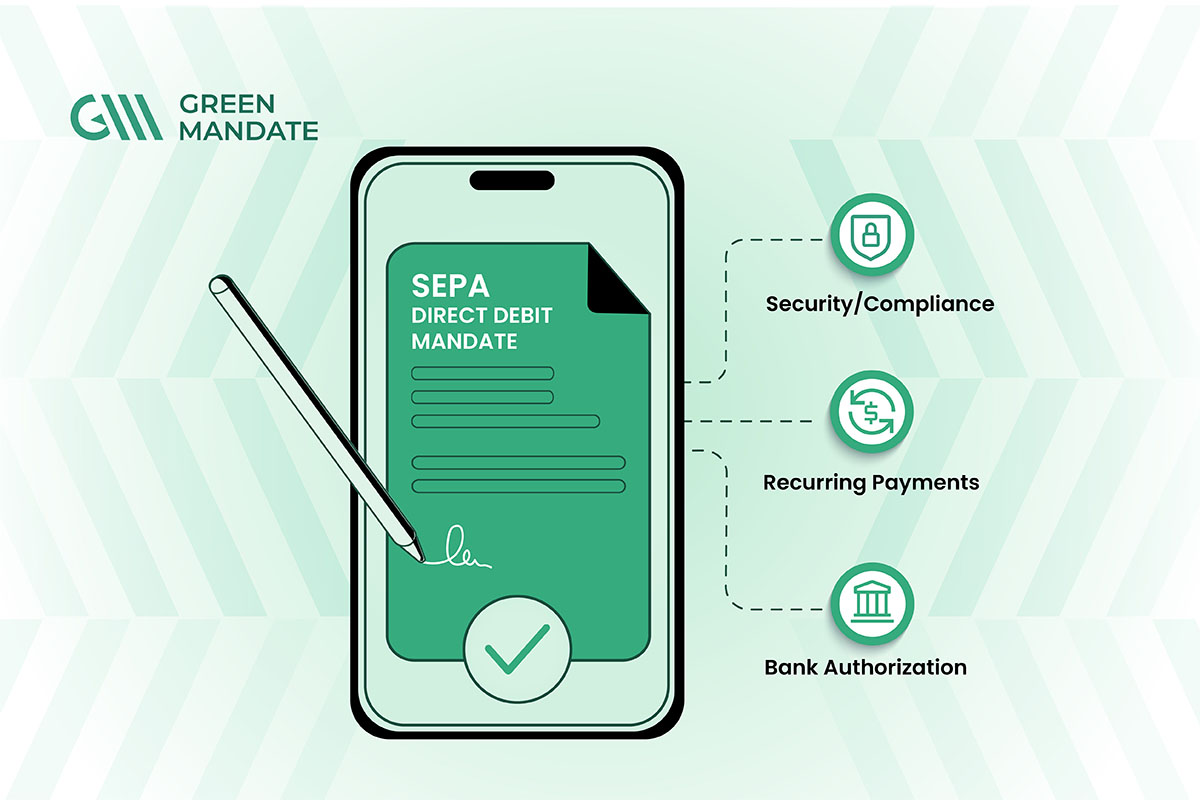
Many customers hesitate to fill out lengthy forms when signing up for subscriptions. To address this, emphasise the security and simplicity of your online SEPA mandate process, reassuring customers that their data is protected and that the process is quick and straightforward, encouraging higher Authorization rates.
In this article, we’ll explain the steps involved in the digital mandate process for collecting SEPA mandates online, the information every mandate must include, and the compliance requirements businesses must meet. Stay with us as we walk through each stage of the process, from mandate creation and customer authorisation to secure storage and ongoing compliance.
Key Takeaways
- Key 1
- Key 2
- Key3
7 Steps to Collect SEPA Mandates Online
To collect SEPA mandates online, follow these steps:
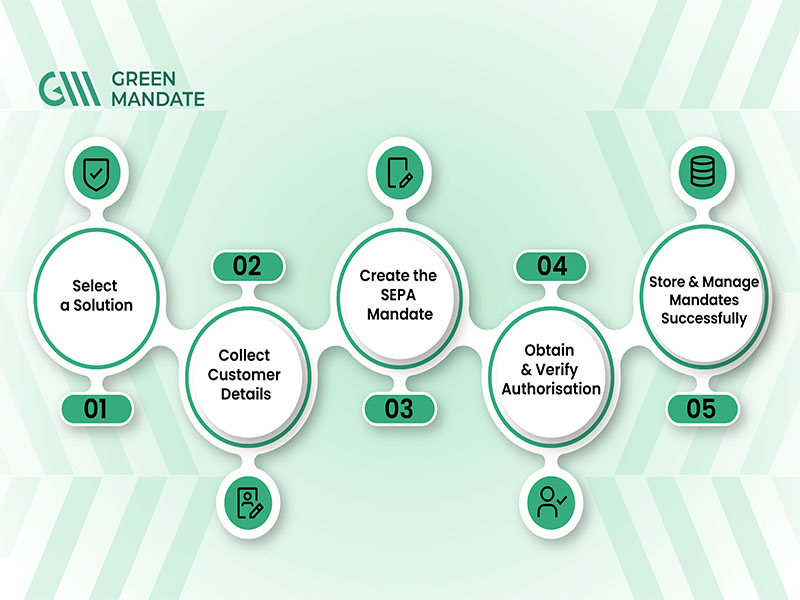
Step 1: Choose a Solution to Collect SEPA Mandates Online
The first step is to choose how you want to collect SEPA mandates online and select a solution that integrates smoothly with your existing systems. Consider options such as Payment Service Providers (PSPs) like GreenMandate, Stripe, and GoCardless, as well as e-signature solutions, and evaluate their compatibility with your technical infrastructure.
PSPs such as GreenMandate, Stripe, and GoCardless help businesses create digital mandates for merchants, collect customer authorisation, store mandate records, and process recurring SEPA Direct Debit payments in one place. E-signature solutions focus on collecting customer consent digitally and can integrate with your existing payment workflow.
Choose the option that best fits your business, technical requirements, and customer experience goals.
Contact our team to discuss your challenges and discover the right solution for your business.
Step 2: Gather Customer Details
Before you collect SEPA mandates online, gather all the information required for mandate authorisation, including the details needed to create a valid SEPA mandate:
- Customer name/Business Name
- Billing address
- IBAN (International Bank Account Number)
- Contact details
Step 3: Draft a SEPA Mandate
The next step is to create a digital mandate that contains all information required under SEPA rules so customers can complete it electronically.
Step 4: Receive Customer Consent
This step is an important part of the SEPA mandate authorization workflow because customers must authorise future direct debit payments from their bank accounts. After you prepare the mandate, customers can authorise it directly through your website, checkout page, or mobile application using one of the following methods:
- Checkbox authorization
- One-time password verification
- Digital signature authorization
- Advanced digital signature authorization
Step 5: Validate Customer Information
Before sending the mandate to the bank for processing, businesses should collect customer authorisation online and verify that the customer has provided accurate information. Specifically, this involves checking:
- IBAN compliance with the required pattern
- Whether the customer provided all the required information
- Identity of the customers and bank account details
- Proof of authorization
Step 6: Save Mandates for Documentation
When you collect SEPA mandates online, document each mandate authorisation and store it securely. Be sure to save the following information for compliance and future reference:
- Mandate number
- Customer consent records
- Date and time of authorization
- Customer signature
- Audit trail details
Step 7: Optimise Your Authorisation Flow
A simple and easy-to-follow authorisation flow will lead to increased authorisation rates:
- Keep your authorisation form short
- Enable mobile authorisation capability
- Pre-populate authorization forms when possible
- Validate information in real-time
- Make your flow instructions clear
What Are the Compliance Requirements for Online SEPA Mandates?
When you collect SEPA mandates online, understanding the legal consequences of non-compliance is crucial. Ensure you meet EPC, eIDAS, and GDPR requirements to avoid penalties and legal risks, and to maintain customer trust.
EPC Regulations
EPC regulation books provide details on the proper generation of SEPA mandates. All mandates should contain the necessary information, provide a reliable authorisation statement in proper form, and include evidence of the customer’s reliable authorisation.
eIDAS Regulation
Even though SEPA regulation does not specify the use of a qualified electronic signature, businesses must prove that the SEPA mandate was approved and that the authorisation can be linked to the customer who gave their consent.
GDPR Regulations
Do not request more information than you need for SEPA mandates. Keeping your business in compliance with GDPR requirements can reduce legal risks and improve customer satisfaction.
Retention Policy
Creditors must keep records of mandates for at least 14 months after the last SEPA transaction to facilitate possible complaints or disputes.

Which Information Is Required by a SEPA Mandate?
To comply with SEPA mandate requirements, every mandate must include the following mandatory details:
Required Information | Why It Is Needed |
|---|---|
Customer Name | Identify the payer |
Customer Address | Verification and records |
IBAN | Payment processing |
Creditor Name | Identify the payment collector |
Creditor Identifier (CID) | SEPA compliance |
Unique Mandate Reference (UMR) | Mandate tracking |
Payment Type | Single or recurring payment |
Authorization Date | Evidence of consent |
Authorization Wording | Legal validity |
Signature/Electronic Consent | Proof of approval |
Why Collect SEPA Mandates Online?
According to the European Payments Council, “simplicity, convenience and efficiency” are the core benefits of SEPA, making euro payments easier for consumers and businesses across participating countries. Building on these advantages, collecting SEPA mandates online offers several additional benefits, including:
- Faster Authorisation: Users can fill out the form online and approve a mandate within minutes. For instance, a subscription-based business can obtain authorisations online when customers make a purchase, activating subscriptions instantly.
- Reduced Errors: Web forms verify information before submission, which reduces errors and failed payment processing. For instance, Best SEPA Mandate Software can verify whether an IBAN is invalid before sending the information for processing.
- Simplified Administration: Automated digital mandate can easily interact with payment solutions and simplify record-keeping. For instance, software companies can automatically issue unique mandate references and make payments based on scheduled dates.
- Improved User Experience: Users can easily authorise transactions online without printing or mailing any documents. For instance, fitness centre members can easily enrol and authorise payments from their smartphones.
- Easy Access to Records: Since the system stores all records digitally, you can easily find mandated records whenever needed. For instance, a business will easily locate records to obtain authorisation if a user disputes the transaction.
Risks When You Collect SEPA Mandates Online
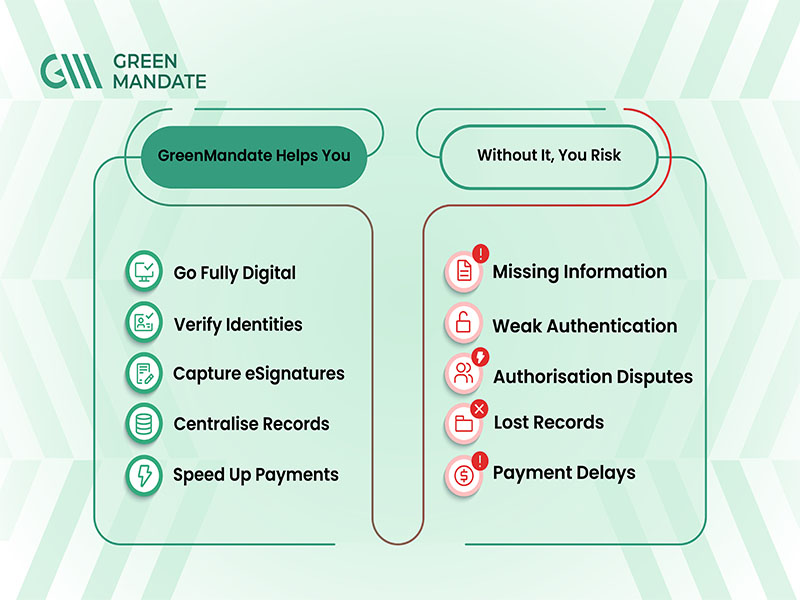
To collect SEPA mandates online successfully and remain compliant, avoid the following common mistakes:
Leaving Out Mandatory Information
A mandate may seem complete at first glance, but the absence of an authorisation wording, an IBAN, or another required detail can render it invalid.
Relying on Weak Authentication
A customer clicks “I agree,” completes the form, and moves on. Later, however, proving that authorisation came from the account holder may become difficult.
Skipping Customer Notifications
A payment appears in a customer’s account without a prior reminder, creating confusion and increasing the likelihood of complaints or disputes. Consider A fitness membership that renews automatically through SEPA Direct Debit. Because the customer never receives advance notice of the upcoming charge, they assume the debit is fraudulent and immediately contact their bank to request a refund.
Mismanaging Mandate Records
A proof-of-authorisation request arrives, but the mandate record cannot be found quickly, delaying the response and creating compliance challenges.
Overlooking Provider Requirements
A mandate passes internal checks, but the bank or payment provider rejects it for failing to meet a specific submission requirement. For example, a company collects valid customer authorisation but forgets to include the correct mandate reference number when submitting the direct debit file. The payment provider rejects the transaction, forcing the company to resubmit it and delaying collection.
Why Choose GreenMandate for Online SEPA Mandate Collection?
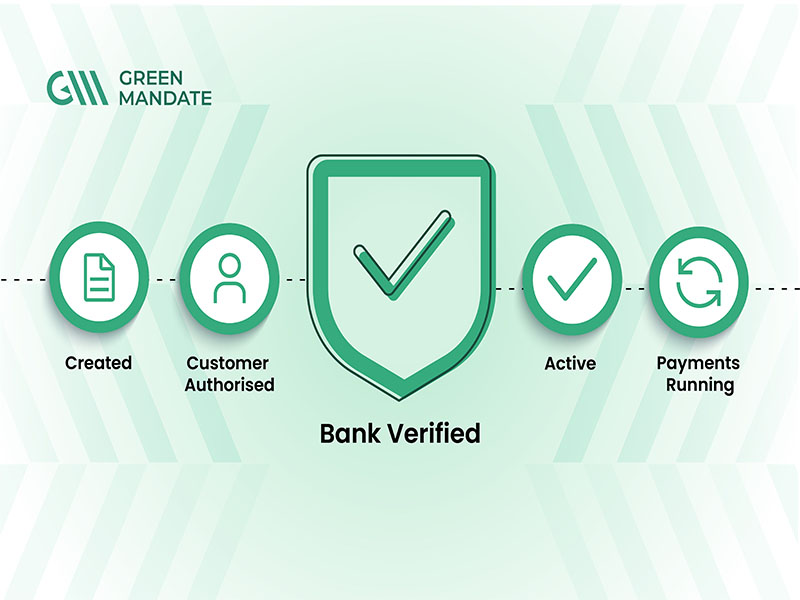
Many businesses choose GreenMandate to collect SEPA mandates online because of the following benefits:
- Collect SEPA mandates through a fully digital process.
- Reduce friction during checkout and authorisation.
- Accelerate customer onboarding and payment setup.
- Verify customer identities with secure authentication.
- Capture consent using eIDAS-aligned electronic signatures.
- Store and manage mandate records in one place.
- Support subscriptions and recurring payment workflows.
- Increase conversion rates with a simpler user experience
Final Thoughts
To successfully collect SEPA mandates online, businesses need a process that keeps payments compliant without creating unnecessary friction for customers. By collecting authorisation digitally, verifying payment details, and securely storing mandate records, companies can simplify recurring payments and reduce manual administration. As customer volumes grow, managing mandates manually becomes more difficult, making digital mandate management tools a practical way to centralise records, improve visibility, and create a smoother experience for both customers and internal teams. For most businesses, we recommend using a dedicated SEPA mandate management solution, such as GraanMandate, to streamline operations, maintain compliance, and reduce the risk of errors as payment volumes increase.
FAQs
Who Is Responsible for Storing a SEPA Mandate?
The creditor (the business collecting the payment) is responsible for storing the original mandate and maintaining records of any amendments or cancellations.
Are online SEPA mandates legally valid?
To legally collect SEPA mandates online, businesses must obtain customer consent, collect all required mandate details, and maintain proper authorisation records.
Can a Customer Cancel a SEPA Mandate?
Customers can cancel a SEPA mandate at any time by notifying the creditor or their bank, depending on the circumstances. Once a mandate is cancelled, no further SEPA Direct Debit collections should be processed under that authorisation when you collect SEPA mandates online.
Do SEPA Mandates Expire?
Yes, according to the European Payments Council (EPC), a SEPA mandate automatically expires if no collection is made under that mandate for 36 months. Once the mandate expires, businesses must obtain a new authorisation before they can collect additional payments.